Random Robot Objects
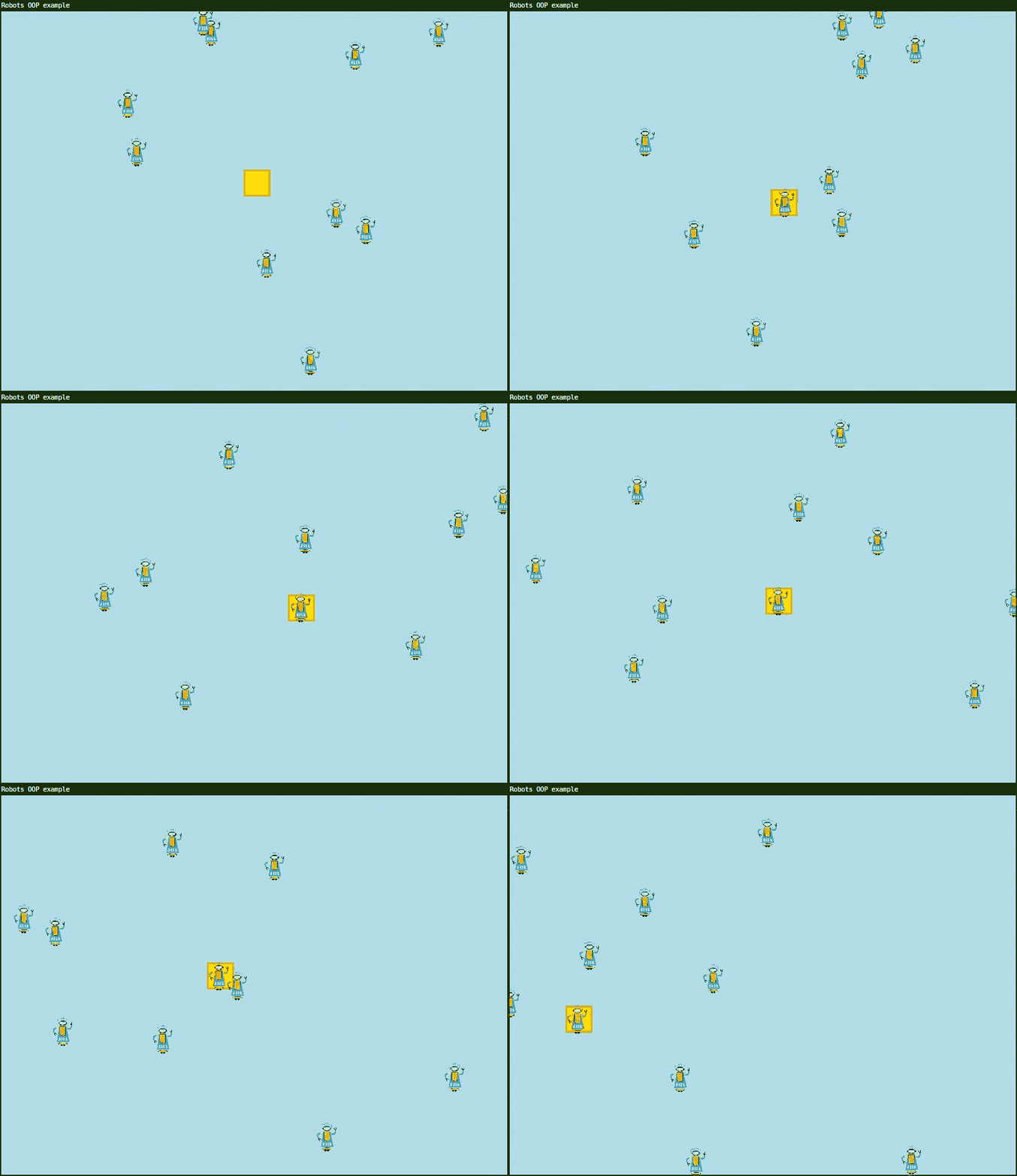
This object-oriented programming example demonstrates two different Lua patterns - classes with metatables (Robot) and simple tables with methods (box). It consists of a Robot class definition and simple box object.
The box object demonstrates a simpler object-oriented structure of a table with methods. Lua's power of first-class functions is represented here.
A first-class function means they can be:
- Stored in tables (like in the
boxtable) - Assigned to variables (like
display = function(self) ... end) - Passed as arguments to other functions
- Returned from functions
The box object demonstrates this with display and move functions stored as values in the box, just like x, y and size are numbers.
The Robot demonstrates uses of metatables.
Robot.__index = Robotsets up the metatablesetmetatable(robot, Robot)links each instance to the Robot table- This enables method lookup - when you call
robot:move(), Lua looks in the Robot table to find themovefunction
Advanced ways to extend the program:
- add more robot behaviors - make robots change colors when they collide with each other
- score counter - count how many times the box teleports to robots
- different robot types - a FastRobot that moves twice as fast as the others
- mouse interaction - Create new robots at the mouse position when clicked
- Box trail - a line showing the box's history
- Chase - make robots chase the box
- power-ups - add collectible items that change robot speed, size or behavior
- animated sprites - multiple images to animate movement
require("L5")

-- Note: The Robot class definition below could be moved to a separate file robot.lua
-- and then loaded with: local Robot = require("robot")

Robot = {}
Robot.__index = Robot -- Tells Lua to use Robot's metatable to find methods

-- Global vars
robots = {}  -- Table to hold all robot instances
robotImg = nil

function setup()
  size(800, 600)
  windowTitle("Robots OOP example")
  robotImg = loadImage("assets/robot.png")
  imageMode(CENTER)
  rectMode(CENTER)
  strokeWeight(3)
  fill("gold")
  stroke("goldenrod")

  -- Initialize box position
  box.x = random(width)
  box.y = random(height)

  -- Create 10 robots
  for i = 1, 10 do
    table.insert(robots, Robot:new())
  end

  describe('Random robots moving around the screen. They steal the yellow box when they overlap with it.")
end

function draw()
  background("lightblue")

  -- Update and draw box
  box:move()
  box:display()

  -- Update and draw all robots
  for i = 1, #robots do
    robots[i]:move()
    robots[i]:display()
  end
end

-- Robot class definition
function Robot:new(x, y, w, h)
  local robot = {
    x = x or random(width),
    y = y or random(height),
    w = w or 70,
    h = h or 70,
    xspeed = random(-2, 2),
    yspeed = random(-2, 2)
  }
  setmetatable(robot, Robot)  -- Links the instance to Robot class
  return robot
end

function Robot:move()
  self.x = self.x + self.xspeed
  self.y = self.y + self.yspeed

  -- Bounce off walls
  if self.y > height or self.y < 0 then
    self.yspeed = self.yspeed * -1
  end
  if self.x > width or self.x < 0 then
    self.xspeed = self.xspeed * -1
  end
end

function Robot:display()
  image(robotImg, self.x, self.y, self.w, self.h)
end

-- Box object using simple table with methods
-- Demonstrates first-class functions stored as table values
box = {
  x = nil,  -- Initialized in setup() after random() is seeded
  y = nil,
  size = 40,

  display = function(self)
    square(self.x, self.y, self.size)
  end,

  move = function(self)
    -- Teleport to nearest robot if close enough
    for i = 1, #robots do
      if dist(self.x, self.y, robots[i].x, robots[i].y) < self.size then
        self.x = robots[i].x
        self.y = robots[i].y
        break
      end
    end
  end
}
Related References
Related Examples
- 10print variations - An implementation of the classic maze-drawing algorithm
- Conway's Game Of Life - An implementation of the zero-player game and simulation formulated by mathematician John Conway
- Daily Rituals - One a day daily ritual generator